A Caribbean Maritime View from the Crow’s Nest
Rising Investment, Tighter Capacity and Shifting Security Realities are Transforming How Freight Moves Through the Caribbean and Beyond.
Caribbean trade lanes are crowded before sunrise.
At the port of Jacksonville, the docks are already in motion. Truckers deliver containers full of cargo destined for the Caribbean, reefer units hum in the humid air and crews finish loading a Trailer Bridge barge for a southbound run. On the commercial side, it’s everything from cleaning products and apparel to solar equipment and construction materials. On the government side, it might be containers of food, hygiene supplies and medical gear moving to support U.S. troop rotations across the region.
Commercial expansion, growing nearshoring interest, and increased security activity are making the Caribbean one of the Western Hemisphere’s most strategic and most challenging logistics theaters.
For shippers, manufacturers and government decision makers, the stakes are high. Get the Caribbean wrong and you risk stockouts, blown capex timelines and idle plants. Get it right and you gain a resilient, near-market node that can blunt global shocks and feed growth for decades.
This feature looks at how the region is changing, why logistics has become a make-or-break issue, and how players like Trailer Bridge are solving problems on the water and on the ground.
A Small Region with Outsized Importance
By most macro indicators, the Caribbean is in the middle of a long, complicated upswing.
A 2024 report prepared by Americas Market Intelligence (AMI) for the Caribbean Shipping Association projected overall regional growth of about 8 percent in 2024 and 6 percent in 2025, building on a strong 2023. Freight rates remain elevated as capacity tightens and congestion persists at key hubs such as Caucedo, Kingston and Panama.
Tourism is back above pre-COVID levels, energy-centric economies like Guyana are booming on offshore oil, and diversified economies such as the Dominican Republic and Puerto Rico are drawing new investment in manufacturing, logistics and infrastructure.
At the same time, the region is wrestling with:
- Structural trade imbalances, with full ships southbound and empty containers northbound.
- Aging or under-invested port infrastructure on many smaller islands.
- Intensifying climate risk, from Category 5 hurricanes to persistent flooding.
- A shifting geopolitical “influence web” as the United States, Europe and China compete through trade, aid and infrastructure finance.
The result is a region full of opportunity yet highly exposed to global volatility. For those seeking to capitalize on the challenge, the Caribbean may be the right place at right time to make a move.
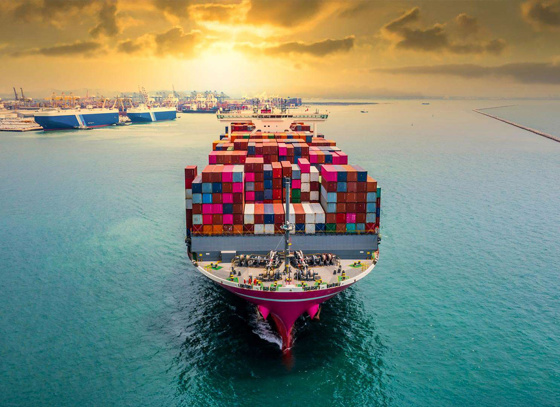
Top Caribbean Ports for Global Shipping and International Trade
From San Juan, Puerto Rico to Kingston, Jamaica, the Caribbean is home to some of the region’s most important shipping hubs. With a regional GDP estimated at more than $151 billion, the Caribbean represents a powerful gateway for global shipping and international trade.
Nearshoring is Real and Growing
From a supply chain standpoint, the biggest structural change is nearshoring.
“First and foremost, nearshoring is driving significant change in the region,” says Zach Monger, who leads Trailer Bridge International and the team’s work across the Caribbean. “North American companies are working to diversify supply chains that were historically concentrated in Asia. This presents a long-term opportunity for the Caribbean, a region long defined by its role as a transshipment hub.”
The Dominican Republic is at the forefront. Its free trade zones have become the region’s leading platform for light manufacturing and assembly, combining efficient ports, bonded warehousing, logistics parks and a sizable labor pool. The country has been particularly successful in medical devices, textiles and low-value auto components, all classic nearshoring sectors where proximity and tariff advantages matter.
“As we speak, the Dominican Republic is transforming the Caribbean from primarily an inbound logistics and transshipment hub into a nearshoring manufacturing hub,” Monger says. “They have created a working model worth emulating.”
Puerto Rico is also playing a role in the nearshoring. It remains primarily an import market, but it is also a critical node for U.S. pharmaceutical and life sciences supply chains, attracting new consumer and retail investment.
Under the leadership of Puerto Rico’s governor, Jennifer González Colón, “the island has positioned itself as a ‘logical’ investment destination, serving as a ‘bridge’ to the U.S. market amidst uncertainty and tariff policies on U.S. exports.”
Her new policy for relocating multinational companies to Puerto Rico has attracted “more than $2 billion in committed investment and created more than 4,000 jobs.” Forty-three percent of the island’s GDP comes from the manufacturing sector.
And while Puerto Rico is currently on the rise, the Dominican Republic sets the pace for manufacturing in the region.
“There is some manufacturing on the island, but not at the scale of the Dominican Republic,” says Kyle Jones, who oversees Trailer Bridge’s commercial operations. “And while the DR has become a steady export market for us, we are beginning to see Puerto Rico make a push to return as a manufacturing and export hub in the region.”
Puerto Rico’s history as a manufacturing center in the Caribbean has had its ups and downs. In the mid-1900s, its largest industry was needlework, later shifting to chemicals, clothes and electronics.
A U.S. federal tax incentive in 1976 helped grow the island’s pharmaceutical industry significantly until the incentive was phased out in 1996. Still, from 1995 to 2005, pharmaceuticals, medicines and chemicals continued to increase, despite an overall dip in manufacturing jobs over the same period. Today, Puerto Rico stands as a leading U.S. exporter of pharmaceutical and medicine manufacturing, exporting nearly $25 billion in related goods in 2024.
Renewable energy adds another layer. Jones points to a new solar manufacturing operation being developed on the island and continued demand for solar infrastructure and power-generation equipment, all of which depend on reliable ocean service for oversized cargo.
From a shipper’s vantage point, the case for nearshoring is simple: shorter, more predictable transit times and a hedge against geopolitical shocks.
“Shipping a container from Asia to the U.S. can take 30 to 60 days,” Jones says. “Shipping from the Dominican Republic or Puerto Rico to the U.S. takes about six to eight days. Costs may be higher compared to shipping from Asia, but the shorter and more reliable transit can outweigh the difference.”
Efficient Freight Movement is Critical to Success
Even as nearshoring gains momentum, efficient freight movement is always top of mind.
For Trailer Bridge, the core commercial spine is its tug-and-barge service linking Jacksonville with San Juan and connecting onward to the DR and the U.S. Virgin Islands. On those routes, the commodity mix is broad and getting broader. It includes consumer and retail goods, food and beverage, construction materials, renewable-energy infrastructure and new and used vehicles.
“Our RORO capabilities allow us to move oversized and over-dimensional cargo, open-deck materials, generators, steel structures and electrical equipment that won’t fit into a standard container. That’s in addition to the standard containerized cargo” Jones says.
Trailer Bridge International, which functions as a non-vessel operating common carrier (NVOCC), moves an equally diverse set of commodities. It handles everyday items like cleaning supplies, beverages and canned goods as well as specialized and oversized cargo. The company also manages specialized flows such as ice cream into Jamaica, lubricants from Texas to Trinidad, refinery-related cargo in St. Croix, greenhouse equipment bound for Trinidad, raw materials like lignosulfonates and steady tobacco shipments into the Dominican Republic and Haiti.
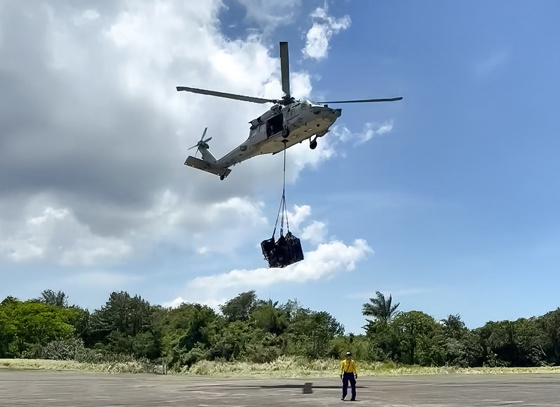
Trailer Bridge Delivers Critical Military Support
In August, 2025, Trailer Bridge successfully executed its first mission under the WEXMAC 2.0 contract, delivering critical support to the U.S. Navy’s Continuing Promise 2025 operation in the Dominican Republic.
Problem Solvers Wanted
In the Caribbean market, execution depends less on finding a ship than finding a partner who knows the routes, culture and nuances.
“If you’re building a new business, it’s tough for someone to come in blind,” Jones says. “Understanding the nuance of what you’re doing and having partners with experience can be vital advantages.”
For Trailer Bridge, differentiation starts with being both an asset-based Jones Act carrier and an integrated logistics provider with U.S. inland capacity, international forwarding and a network of agents and partners across the islands. That translates into:
- Single-point-of-contact account management: Jones says at Trailer Bridge, every booking goes to one account manager who handles it from start to finish.”
- Door-to-door control: With its own equipment, Trailer Bridge can move a container from a free trade zone in Santo Domingo to a distribution center in Ohio under a single umbrella or vice versa.
- Unique equipment advantages: 53-foot containers are rare in global trades but valuable for light, high-volume cargo like medical supplies. “A 53-foot box can fit several additional pallets compared to a standard 40-foot container,” Monger says.
- Specialized project and event moves: The company has successfully moved carnivals, Monster Jam, Disney on Ice and other large military operations into the islands that require additional project management and unique timelines.
On the government side, Goss sums it up. “We move mission-critical cargo to the world’s most challenging locations.” That has included M1 Abrams tanks to Australia, High Mobility Artillery Rocket Systems to Romania and life-support missions under the Worldwide Expeditionary Multiple Award Contract (WEXMAC). When the U.S. Navy needed urgent accommodations for USNS Mercy personnel in the Dominican Republic, Trailer Bridge secured 80 hotel rooms within 48 hours.
“In that case, we were problem solvers and enablers,” Goss says. “If they didn’t bring it with them, they came to us to get it.”
Why Relationships Still Beat Algorithms
Trailer Bridge has invested in transportation management systems, pricing tools and visibility solutions to accelerate quoting and give customers real-time status. Yet in the Caribbean, relationships are still the decisive asset.
“When customers call Trailer Bridge, they reach a person, not a bot,” Jones says. “Face-to-face interactions matter deeply in the Caribbean culture, and we’ve built our culture around the dedication to personalized service.” Monger agrees. “You can’t copy and paste what you’re doing in North America, Europe or Asia. It’s about partnership, visibility and local customization. That requires having boots on the ground.”
He likens the NVOCC or freight forwarder role to a general contractor: “They’re the glue that holds it together.”
For shippers, a winning approach starts with understanding the market, leaning on partners who understand the various rules and documentation requirements, building contingency plans for climate events, and prioritizing vendors with strong digital capabilities and deep local networks.
Same Waters, New Security Realities
The Caribbean is also at the center of a shifting security landscape.
According to Goss, an estimated 15,000 to 20,000 U.S. troops are stationed in and around the region. As deployments ramp up, the logistics focus shifts from hardware to sustainment.
“It takes sustainment operations to support military missions,” Goss says. “You’re probably talking 20 to 50 containers of food, freezer, chill and dry, every two weeks or more.”
Most of that moves along the same lanes that carry consumer goods and project cargo, making U.S.-flag Jones Act carriers essential connectors between commercial and defense logistics.
At the same time, Chinese investment in Caribbean port infrastructure has accelerated, with activity in nearly 40 ports across Latin America and the Caribbean. That blend of U.S. trade dominance, Chinese capital and European re-engagement makes the region a test case for how commerce, security and development intersect on the waterfront.
For shippers, it underscores why carrier choice is about more than rate sheets. It is about reliability, compliance, security and trust.

U.S. Military Strengthens Rapid-Response Capabilities in the Caribbean
On November 1, 2025, U.S. Marines of the 22nd Marine Expeditionary Unit conducted training operations in Puerto Rico. The activity unfolds within a broader Caribbean deployment focused on counter-narcotics and homeland defense, with Puerto Rico serving as a forward staging area for rapid action.
A View From the Crow’s Nest
AMI’s analysis points to several structural shifts that will shape Caribbean logistics over the next decade:
- Port modernization and digitalization: Climate-resilient infrastructure, unified digital platforms and faster customs clearance will set some ports apart, creating a clear efficiency and resilience advantage.
- Intra-Caribbean trade growth: Explosive growth in Guyana, food-security initiatives and emerging ferry-style services linking Guyana, Trinidad and the Eastern Caribbean could lift historically low regional trade volumes.
- Energy transition: Trinidad and Tobago are positioning themselves as methanol bunkering hubs as carriers explore low-carbon fuels, and Puerto Rico is rebuilding its energy grid
- Slow-burn nearshoring: While nearshoring hasn’t unfolded as rapidly as predicted after COVID, analysts expect continued interest as manufacturers diversify away from over-concentrated Asian supply chains.
Overall, the Caribbean is taking center stage as a strategic hub, where global powers and regional governments alike are seeking to capitalize on its geographic and economic potential.
With overlapping commercial and defense logistics, complex customs, and evolving infrastructure, the region demands partners who understand its dynamics.
For Trailer Bridge, decades of experience in the Caribbean give them unmatched local knowledge and operational expertise.
If there is one takeaway for supply chain leaders, it is this: the
Caribbean is not a peripheral market. It is a vital logistics theater that demands serious attention and capable partners.

Ready to Streamline Your Caribbean Supply Chain?
Our team knows this lane better than anyone. Let a Trailer Bridge expert help you create a dependable, end to end logistics solution that keeps your cargo and your business moving smoothly.
- Share


Related Articles

Read More
February 20, 2026
The Jones Act and Puerto Rico: What It Is and Why It Matters for Shipping
For companies shipping freight to Puerto Rico and for businesses operating on the island, a clear understanding of the Jones…

Read More
January 28, 2026
Trailer Bridge Outlook 2026: Planning, Resilience, and Opportunity in the Supply Chain
Explore Trailer Bridge’s 2026 outlook for the supply chain, including market trends, Caribbean and international shipping insights, workforce evolution, and…

Read More
January 16, 2026
Logistics Readiness in the Western Hemisphere: Access, Sustainment, and Execution
An operationally focused discussion on the access, infrastructure, and commercial partnerships that enable logistics readiness across the Western Hemisphere.
Stay Connected