Enabling NATO Rapid Mobilization: Operational Realities in Poland
Why trusted military-commercial partnerships at Polish ports are critical to alliance readiness and deterrence
The security environment along NATO’s eastern flank has placed unprecedented emphasis on the alliance’s ability to move forces rapidly, at scale, and with reliability. For the U.S. Department of War (DoW) and NATO planners alike, deterrence is now measured not only by force posture, but by how quickly combat power and sustainment can be delivered to the right place under contested conditions.
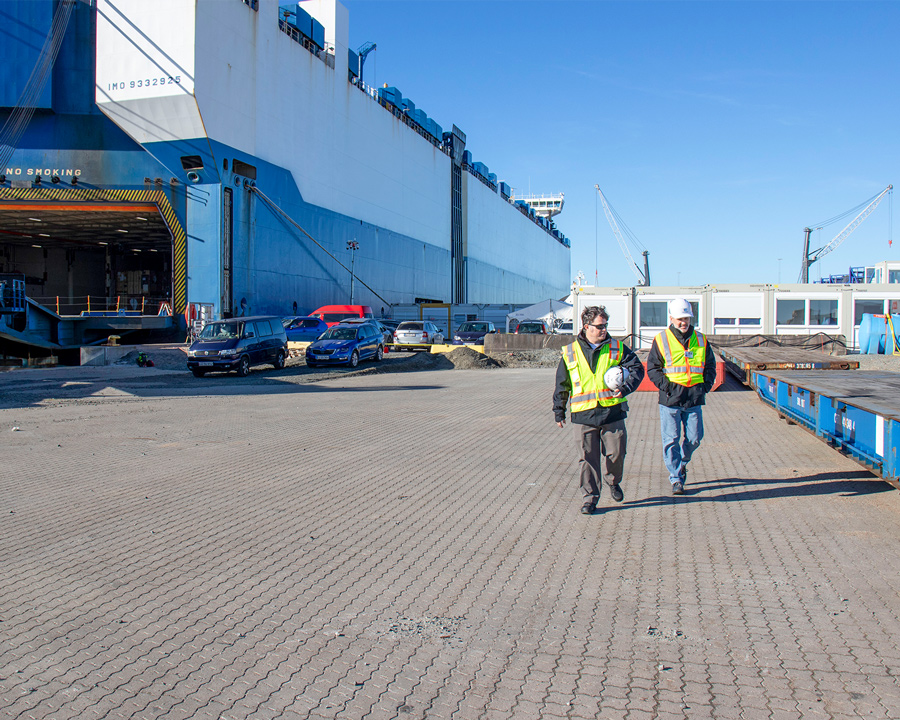
Poland demands a central position in this calculus. Baltic ports such as Gdańsk and Gdynia function as critical maritime gateways where U.S. and allied forces transition from transatlantic movement to onward distribution across Central and Eastern Europe. Their performance directly affects NATO’s ability to meet accelerated reinforcement timelines and sustain operations along its most exposed flank.
While recent investments in port infrastructure, intermodal connectivity, and dual-use capacity have strengthened Poland’s role in allied defense planning, experience has demonstrated that infrastructure alone does not guarantee success. Mobilization at speed depends on the ability to synchronize military requirements with commercial execution; navigating host-nation regulations and bureaucracy, coordinating across multinational command structures and agencies, and adapting operations in real time as conditions evolve.
As a result, trusted commercial logistics partnerships have become an operational necessity for government agencies. Commercial providers can no longer be relegated as peripheral players; they are integral to the successful execution of DoW and NATO mobility objectives. Their readiness, reliability, and regional expertise increasingly shape how reinforcement plans translate from strategy into action.
This paper examines the operational realities of rapid mobilization through Poland, with a focus on the conditions required to support effective military–commercial collaboration at key ports and along critical distribution corridors.
The Strategic Importance of Polish Ports
Since February 2022, military mobility has moved from a planning assumption to a central pillar of NATO, DoW and the European Union defense strategies. The ability to reinforce the alliance’s eastern flank within compressed timelines is now a defining measure of deterrence credibility. Within this framework, Polish ports have emerged as indispensable operational nodes linking transatlantic lift to inland force projection across Central and Eastern Europe.
Positioned along the Baltic Sea, ports such as Gdańsk and Gdynia serve as primary entry points for U.S. and allied forces deploying from ports along the Easter and Gulf regions of the United States as well as Western Europe. Their geographic location allows NATO planners to bypass overland bottlenecks farther west while enabling more direct access to sustainment and maneuver corridors leading toward the Baltic States, southeastern Poland, and onward to allied territory along the eastern flank at significantly larger scale. Multiple defense studies published by the European Parliament, NATO-affiliated research institutions, and leading security think tanks have consistently identified these corridors as essential to any credible reinforcement or deterrence posture in the region.
This assessment is reflected in the evolution of the Trans-European Transport Network (TEN-T), which has expanded eastward to strengthen connectivity between Polish ports and inland routes extending toward Ukraine, Moldova, and southeastern Europe as well as northeast into the Baltics. These investments signal a growing alignment between European infrastructure planning and NATO mobility requirements, recognizing that maritime entry points and inland distribution corridors must function as an integrated system rather than as discrete assets.
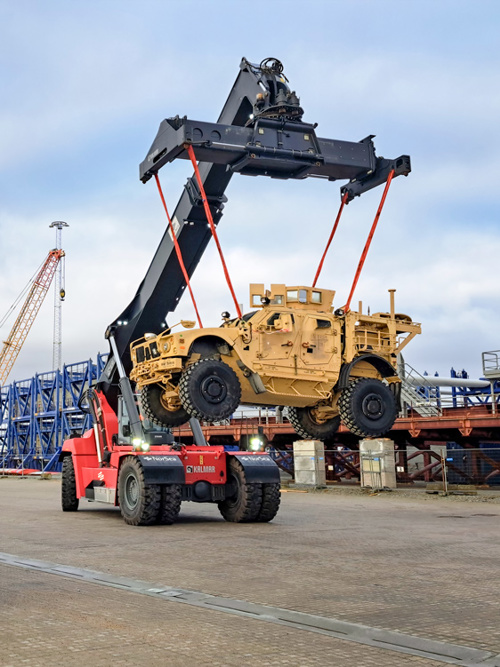
In parallel, Poland has made substantial investments to expand the capacity and versatility of its port infrastructure. Deep-water berths, roll-on/roll-off capability, and expanded intermodal connections have improved throughput and flexibility for both commercial and military cargo. The intermodal terminal currently under construction in Gdynia demonstrates the inextricable link between military operations and commercial industry capabilities. These developments align closely with NATO’s Mobility Master Plan and the European Union’s Military Mobility Action Plan, which emphasize dual-use infrastructure and seamless integration between civilian and military transport networks.
Operational experience, however, has consistently shown that infrastructure capacity alone does not equate to readiness. Large-scale exercises and real-world movements have highlighted persistent challenges related to port congestion, customs clearance, rail gauge transitions, inland transport capacity, and coordination across multiple national authorities. During surge operations, even well-equipped ports can experience delays and congestion if regulatory processes, labor availability, and onward distribution are not fully synchronized with military timelines.
Polish ports therefore serve not only as gateways, but as stress points where the effectiveness of NATO’s mobility framework is tested in practice. Their ability to absorb surge volume, transition rapidly between commercial and military priorities, and sustain tempo over extended periods is essential to meeting reinforcement objectives measured in days rather than weeks.
For DoW and NATO planners, the strategic importance of Polish ports lies in this intersection of infrastructure, geography, and execution. Ensuring effectiveness requires continuous coordination among host-nation authorities, allied commands, and commercial logistics providers responsible for day-to-day port operations. How well these relationships function under pressure will ultimately determine whether strategic mobility plans translate into operational success.
Understanding this strategic role is essential to assessing how Polish ports function within NATO’s broader mobility framework. Meeting these strategic requirements depends not only on infrastructure, but on how effectively military plans are executed in coordination with commercial partners.
The Demand for Reliable, Knowledgeable Logistics Partners
The effectiveness of NATO’s rapid mobilization through Poland is determined long before forces begin to move. Early and continuous coordination between military planners and commercial logistics partners shapes how quickly and reliably strategic intent can be translated into executable movement. From initial planning through sustained operations, logistics integration underpins the ability of government players to meet reinforcement timelines in a complex, multinational environment.
Military logistics in Poland operates within a layered and highly regulated framework. European Union customs regimes, national security requirements, host-nation support agreements, and bilateral arrangements must be navigated in parallel, often under compressed timelines. Effective execution depends on synchronizing these requirements with port operations, inland transportation networks, and multinational movement control teams, an undertaking that demands both technical competence and regional experience.
Within this environment, early communication is a decisive enabler. Advance visibility into force flow, cargo characteristics, and deployment sequencing allows commercial partners to secure port access, align labor and equipment availability, and coordinate regulatory approvals well in advance of vessel arrival. When communication begins early, potential friction points, such as customs clearance delays, rail capacity constraints, or competing commercial demand, can be addressed proactively rather than reactively.
Download the Full Paper on Enabling NATO Rapid Mobilization: Operational Realities in Poland
Explore a deeper analysis of Polish port operations, military–commercial logistics integration, and the practical requirements that shape NATO mobility and deterrence along the eastern flank, drawing on real-world experience and recent operations.
Operational experience from large-scale exercises and real-world movements has shown that early engagement between military planners and commercial logistics providers reduces dwell time at ports, improves throughput, increases predictability during surge operations, and can significantly affect cost and availability of commercial assets. Conversely, late coordination compresses decision-making timelines and shifts risk downstream, where even well-developed infrastructure may struggle to absorb volume at speed.
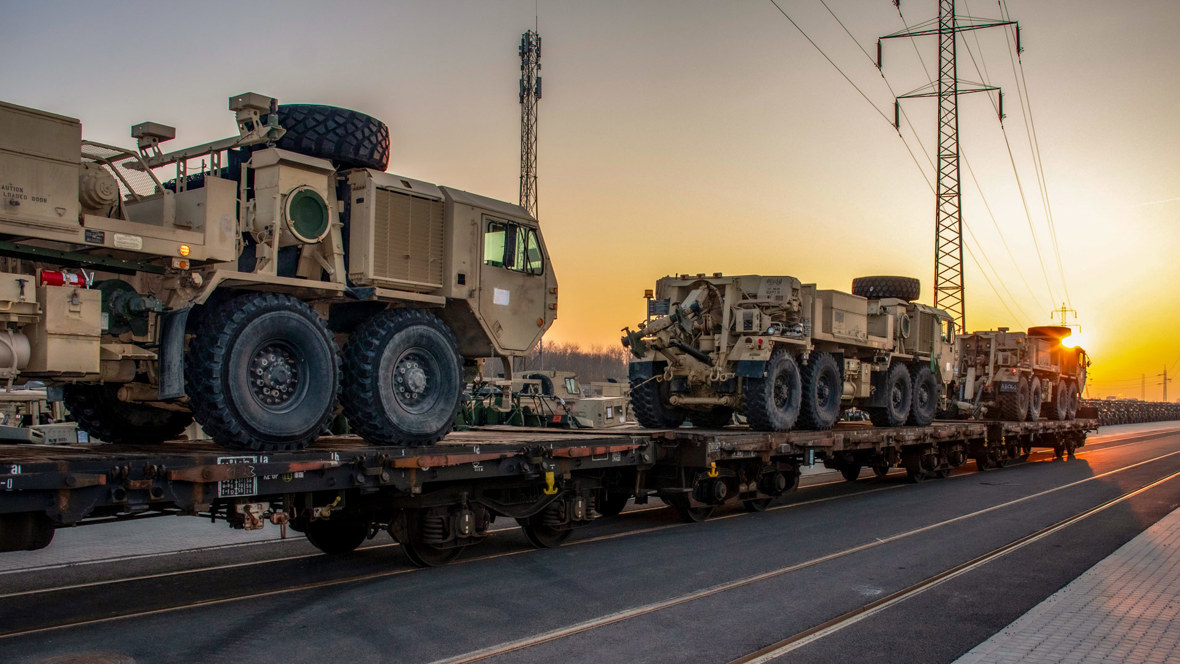
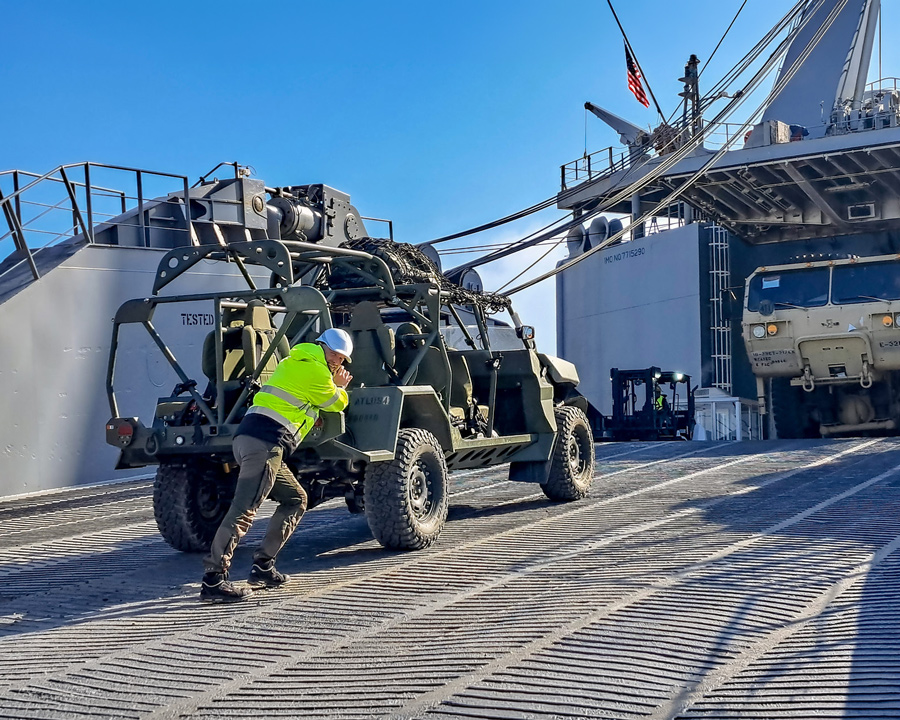
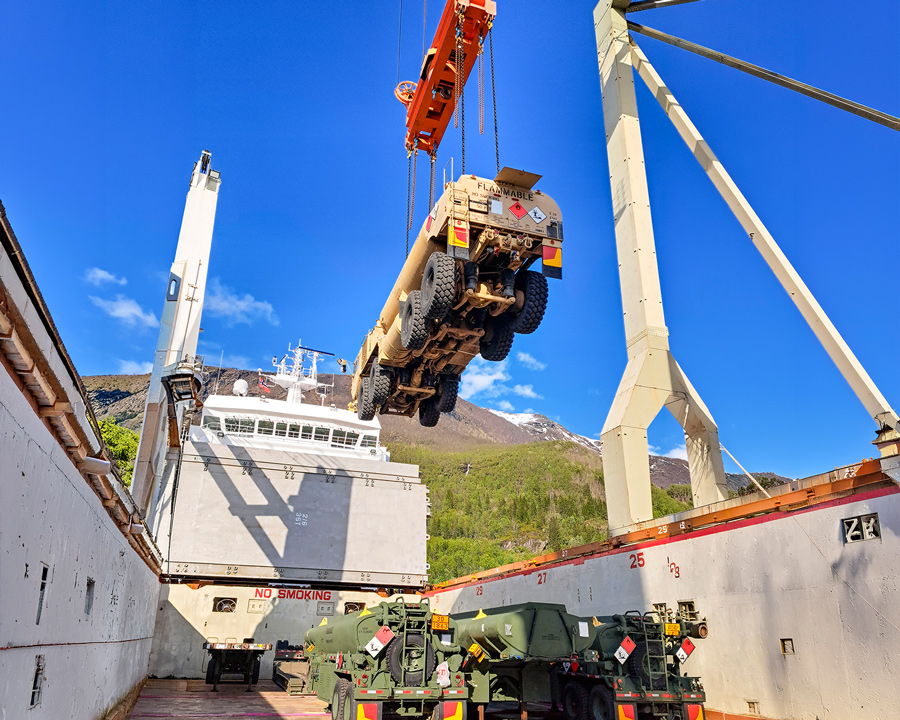
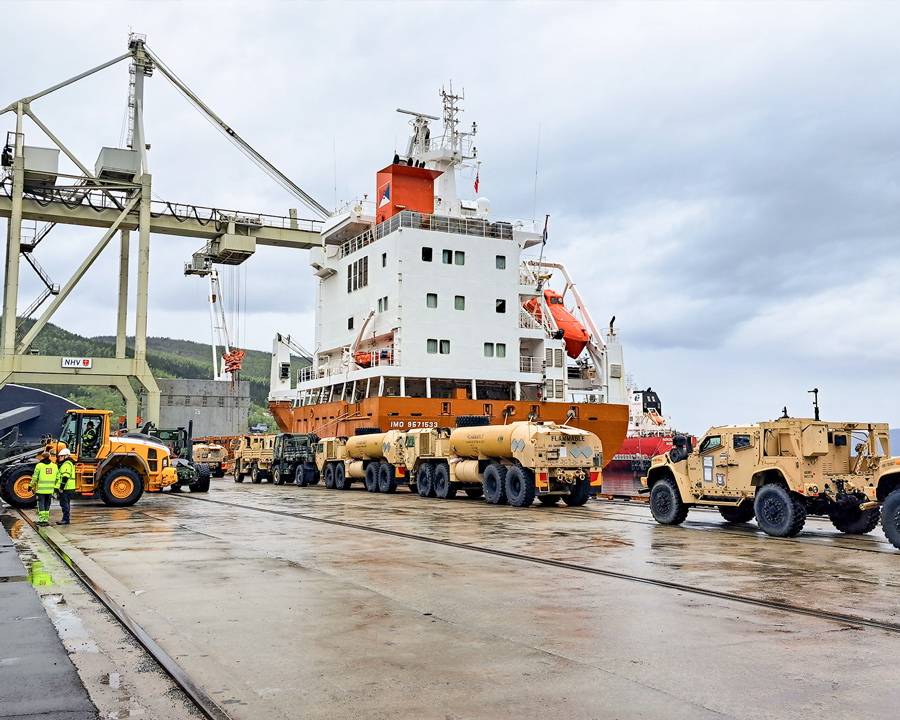
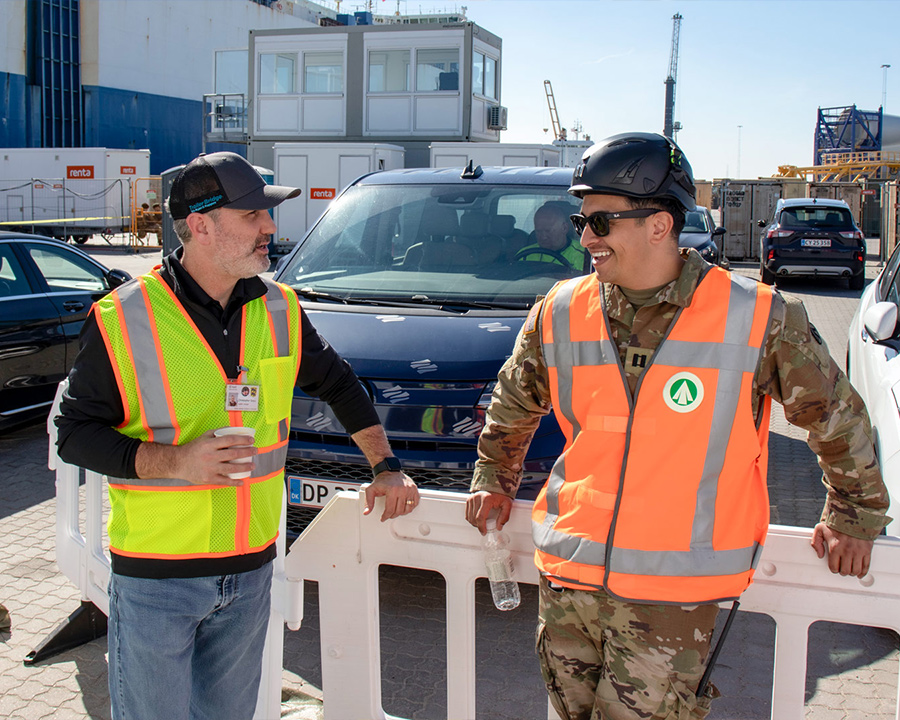
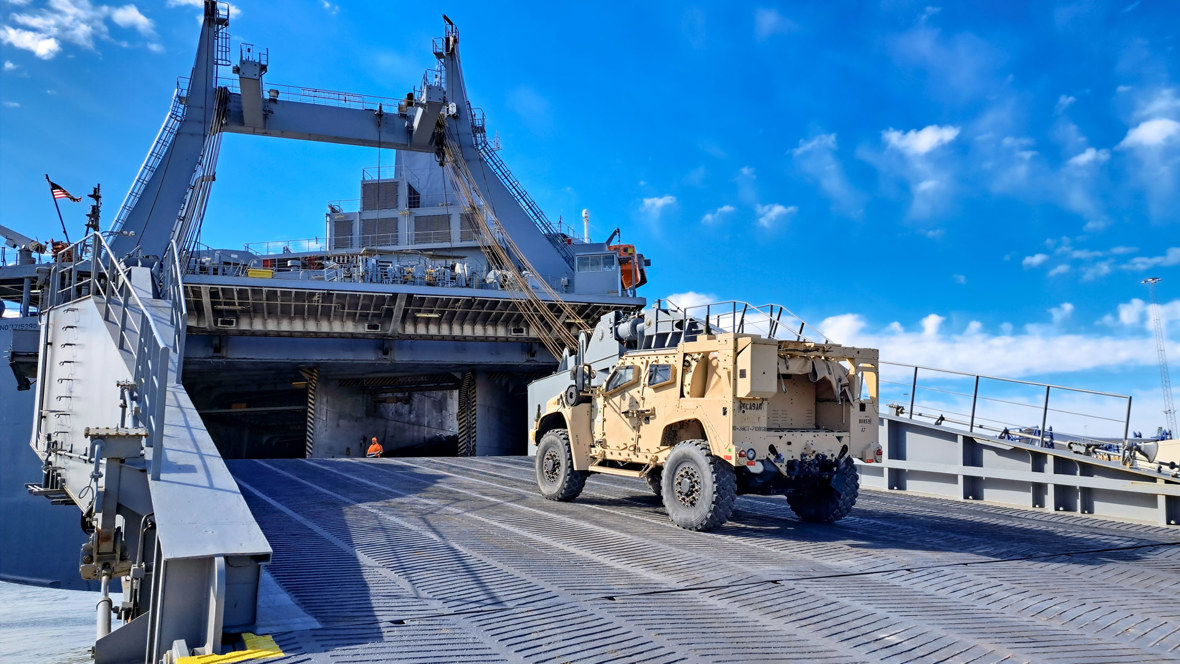
Recent redeployment operations supporting U.S. and NATO exercises in Northern Europe illustrate the value of this approach. In one such movement executed under USTRANSCOM authorities, early coordination between planners, port authorities, and a commercial logistics provider, Trailer Bridge, allowed cargo staging, labor allocation, and vessel sequencing to be aligned well ahead of execution. This advance planning enabled port operations to proceed without disrupting parallel commercial activity and supported timely redeployment following large-scale alliance exercises. While port environments and regulatory frameworks vary across the region, the operational lesson is consistent: early communication materially improves speed, predictability, and risk management during execution.
For this reason, U.S. and NATO planners should increasingly prioritize trusted commercial logistics partnerships over purely transactional capacity. Reliable partners bring the necessary local knowledge including regulatory fluency, established relationships with port authorities and inland carriers, and an understanding of how to operate within multinational command structures. Their value lies not only in moving cargo, but in their ability to use regional expertise when anticipating constraints, adapting to changing conditions, and maintaining tempo as operational demands evolve.
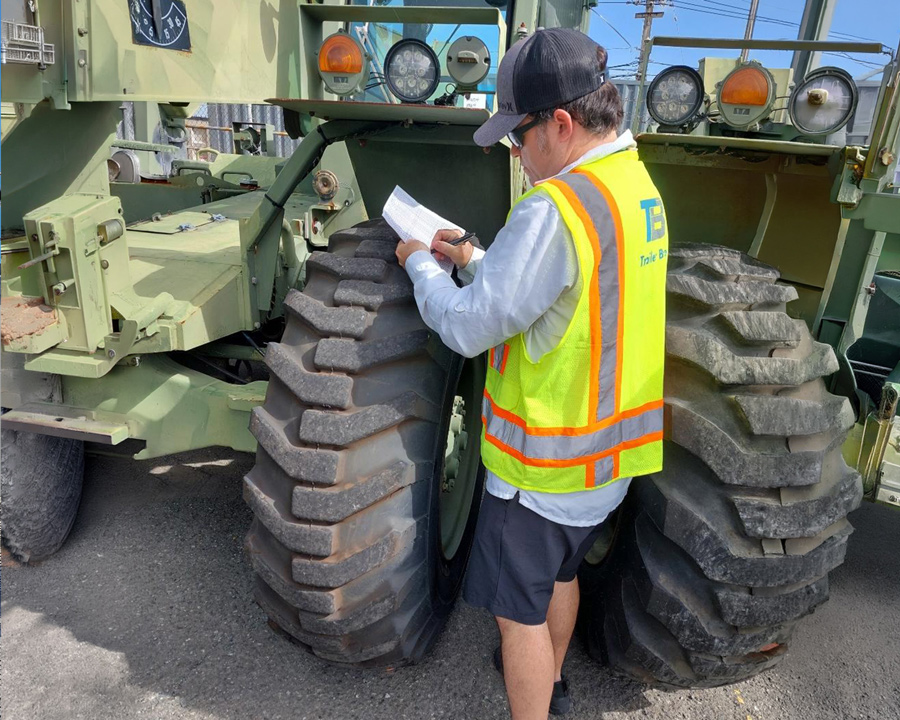
Commercial logistics providers such as Trailer Bridge, with decades of sustained experience supporting the U.S. military and its allies in time-sensitive and high-tempo environments, reflect the importance of this partnership-based approach. Experience coordinating across agencies, aligning commercial operations with military planning cycles, and executing under compressed timelines provides insight into the practical realities of mobilization through Poland and the broader Baltic region.
Equally critical is the ability to maintain shared situational awareness throughout the deployment cycle. Digital information exchange, standardized reporting, and routine coordination forums enable military and commercial players to operate from a common operating picture. When these mechanisms are established early and exercised consistently, logistics networks are better positioned to absorb surge demand, respond to disruption, and sustain operations without compromising mission objectives.
In an environment where timelines are measured in days rather than weeks, reliable and knowledgeable logistics partners function as an extension of military mobility planning. Early communication, regional knowledge, trust, and integration are not supporting activities, they are central to executing NATO and U.S. DoW objectives along the alliance’s eastern flank.
Translating this level of coordination into consistent performance requires specific operational capabilities across the logistics enterprise.
Capability Requirements to Support Eastern European Operations
Executing rapid mobilization in Eastern Europe places distinct and demanding requirements on logistics systems and the partners responsible for operating them. Once strategic intent is established and coordination mechanisms are in place, success depends on whether commercial and military capabilities are aligned to perform under sustained tempo, regulatory complexity, and evolving threat conditions.
The following capability areas consistently emerge as critical to effective execution across Poland and the broader eastern flank.
Scalability and Surge Endurance
Rapid mobilization is not a single event, but a sustained operational condition. Logistics partners must be able to scale capacity quickly while maintaining performance over extended periods, often in parallel with ongoing commercial activity. This includes the ability to surge labor, equipment, and handling capacity without degrading safety, security, or throughput. The avoidance of “contractor fratricide,” where commercial industry partners compete for the same limited labor or material pools, inadvertently driving up costs and depleting resources for one another, must be overcome during the planning phase. Experience supporting high-tempo operations has demonstrated that surge endurance, not peak capacity alone, is what enables continuity when deployments extend beyond initial timelines.
Intermodal Continuity Beyond the Port
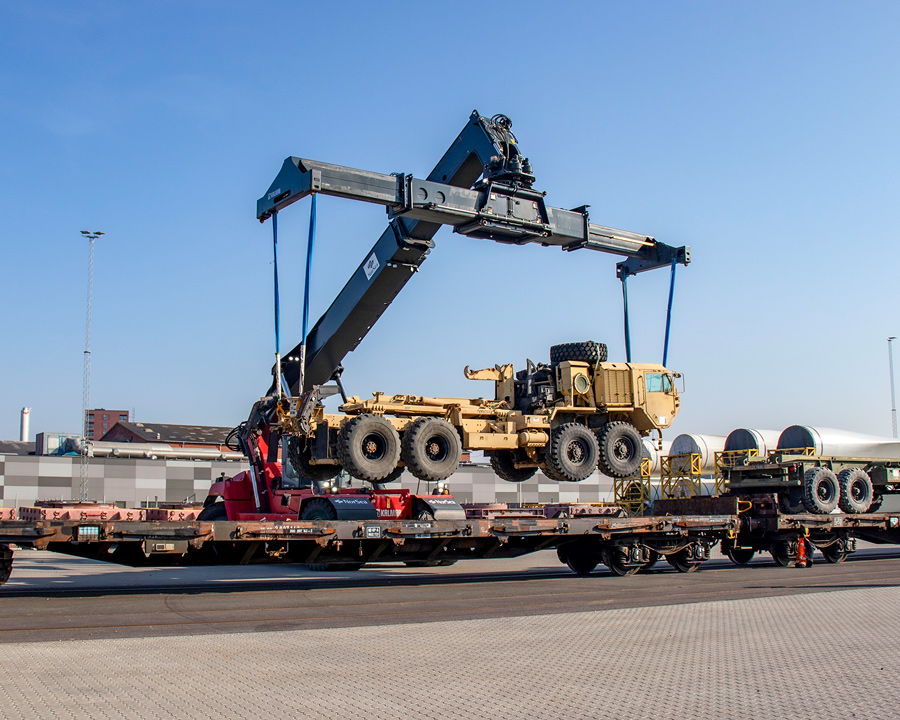
The operational value of a port is realized only when onward movement is uninterrupted. Effective logistics capability requires seamless integration between maritime operations and inland rail, barge, and road networks, accounting for constraints such as rail gauge differences, inland waterway routes, infrastructure load limits, and staging-area availability. Partners must be able to coordinate these transitions in real time, ensuring that cargo flows do not stall at the port–corridor interface. In Eastern Europe, where onward movement routes may shift based on operational priorities and demands, flexibility in intermodal planning is essential.
Regulatory and Digital Readiness
Speed of movement increasingly depends on regulatory alignment and digital integration. Logistics partners must operate fluently within European Union customs frameworks while also complying with national security requirements and bilateral agreements. Digital documentation, advance cargo visibility, and harmonized reporting systems reduce friction and enable parallel processing of approvals. Organizations with experience adapting to evolving customs and port community systems, including the EU’s emerging “single window” initiatives, are better positioned to maintain tempo when regulatory requirements change mid-operation. Efforts are currently underway to modernize military mobility through the implementation of the E-302, an electronic version of the traditional customs form. As the military begins using the electronic customs process, greater efficiencies will be realized
Security and Resilience in Contested Environments
Logistics operations in Eastern Europe must be resilient to both physical and non-kinetic threats. This includes adherence to security protocols for sensitive cargo, protection of personnel and infrastructure, and the ability to maintain operations amid cyber disruption or information degradation. Resilient partners plan for disruption rather than treating it as an exception, incorporating redundancy, contingency routing, and continuous risk assessment into day-to-day execution.
Local Integration and Operational Adaptability
Local relationships are a force multiplier. Effective logistics partners maintain active engagement with port authorities, stevedores, customs officials, and inland carriers, enabling rapid adaptation when conditions change. Familiarity with local operating practices, labor frameworks, and governance structures allows for faster problem resolution during surge operations.
These networks provide more than access; they offer situational awareness. Fluency in local languages, cultural norms, and operating environments enables logistics teams to recognize anomalies, anticipate friction points, and apply practical solutions quickly and effectively in response to evolving conditions. In environments where national priorities may shift quickly, this local integration supports agility without sacrificing compliance.
Organizations such as Trailer Bridge, which operate regularly under U.S. Department of War contracts, draw on this combination of scalability, regulatory fluency, and local integration to inform execution in complex European operating environments. While specific missions vary by location, these capability requirements remain consistent across the eastern flank.
Taken together, these capabilities define what it takes to translate planning assumptions into operational movement. They provide a practical lens through which U.S. and NATO planners can assess readiness, structure partnerships, and reduce risk as forces move through Poland and across Central and Eastern Europe.
Conclusion
The ability to move forces rapidly and reliably has become a defining measure of deterrence on NATO’s eastern flank. As security conditions continue to evolve, the credibility of U.S. and allied defense commitments depends not only on force posture, but on the speed and predictability with which combat power and sustainment can be delivered where they are needed most.
Poland’s ports occupy a critical position within this framework. They are the gateways through which strategic intent must be translated into operational movement, linking transatlantic lift to inland distribution across Central and Eastern Europe. Their effectiveness is shaped as much by coordination, regulatory alignment, and execution discipline as by physical capacity alone.
Experience across exercises and real-world operations has demonstrated that successful mobilization is the product of early planning, continuous communication, and trusted military–commercial collaboration. Logistics partners engaged from the outset help reduce friction, manage risk, and sustain tempo under demanding conditions. When these relationships are established early and exercised regularly, mobility plans are more likely to hold under pressure.
For the U.S. Department of War, NATO, and the European Defense Agency, strengthening rapid force projection through Poland is not a theoretical exercise. It requires sustained investment in infrastructure, policies that enable movement at speed, and partnerships capable of executing in complex and contested environments. As reinforcement timelines compress and operational demands increase, the integration of military and commercial logistics will remain central to alliance readiness and resilience.
Ensuring that this integration is deliberate, practiced, and aligned with strategic objectives is essential to maintaining credible deterrence along NATO’s eastern flank, today and in the years ahead.

Turn Mobility Plans Into Executable Movement.
Meet with our team to explore how integrated military–commercial logistics can reduce friction, sustain tempo, and improve execution under compressed timelines.

Written by Chris Goss
| 
Chris Goss is Vice President of Government & Projects at Trailer Bridge, where he leads logistics programs supporting U.S. defense missions and allied operations. His work focuses on contract execution, operational performance, and program management in complex global environments.
With more than twenty years of experience across the public and private sectors, Chris previously supported the U.S. Army as a civilian and has spent over a decade in industry working closely with U.S. government agencies responsible for military and allied logistics. His background spans operational logistics, contract strategy, and program development, with experience translating mission requirements into executable movement at scale.
- Share


Related Articles

Read More
January 28, 2026
Trailer Bridge Outlook 2026: Planning, Resilience, and Opportunity in the Supply Chain
Explore Trailer Bridge’s 2026 outlook for the supply chain, including market trends, Caribbean and international shipping insights, workforce evolution, and…

Read More
January 16, 2026
Logistics Readiness in the Western Hemisphere: Access, Sustainment, and Execution
An operationally focused discussion on the access, infrastructure, and commercial partnerships that enable logistics readiness across the Western Hemisphere.

Read More
December 19, 2025
2025 Year in Review: Strategy and Success
Explore Trailer Bridge’s 2025 highlights, from strategic milestones and industry awards to employee achievements, community initiatives, and operational excellence. Discover…
Stay Connected