The Jones Act and Puerto Rico: What It Is and Why It Matters for Shipping
For companies shipping freight to Puerto Rico and for businesses operating on the island, a clear understanding of the Jones Act is essential. In this article, we define the Jones Act, explain why it exists, and outline the role it plays in shaping the Puerto Rico trade.
What Is the Jones Act?
The Jones Act is part of the Merchant Marine Act of 1920, a federal law enacted to strengthen the United States maritime industry following World War I.
At its core, the Jones Act governs domestic ocean shipping between U.S. ports. It requires that cargo transported between U.S. ports be carried on vessels that are:
- U.S.-Flagged
- U.S.-Built
- U.S.-Owned
- U.S.-Crewed
Another term often used to describe this is “coastwise trade.”
In practical terms, if cargo is moving from Jacksonville, Fla., to San Juan, Puerto Rico, or from Houston, Texas, to Puerto Rico it must travel on a qualified Jones Act vessel.
Why Does the Jones Act Exist?
The Merchant Marine Act of 1920 was created to ensure that the United States maintains:
- A strong domestic maritime industry
- A fleet of vessels available for national defense
- A base of trained American mariners
- Reliable domestic shipping infrastructure
The law was designed not only for economic stability but also for national security. A robust U.S.-flag fleet ensures the country has ships and skilled crews available during times of war, emergency, or natural disaster.
Today, the Jones Act applies to all domestic waterborne trade between U.S. ports including Alaska, Hawaii, Guam, and Puerto Rico.
Why Is Puerto Rico Governed by the Jones Act?
Puerto Rico is a U.S. territory. As such, shipments between the mainland United States and Puerto Rico are considered domestic commerce, not international trade.
That distinction is critical.
Shipping from Miami to the Dominican Republic can be handled by a foreign-flag vessel. Shipping from Jacksonville to San Juan must move on a Jones Act carrier.
Because Puerto Rico relies heavily on ocean freight for essential goods including food, medicine, fuel, construction materials, and retail inventory, the Jones Act plays a central role in the island’s supply chain.
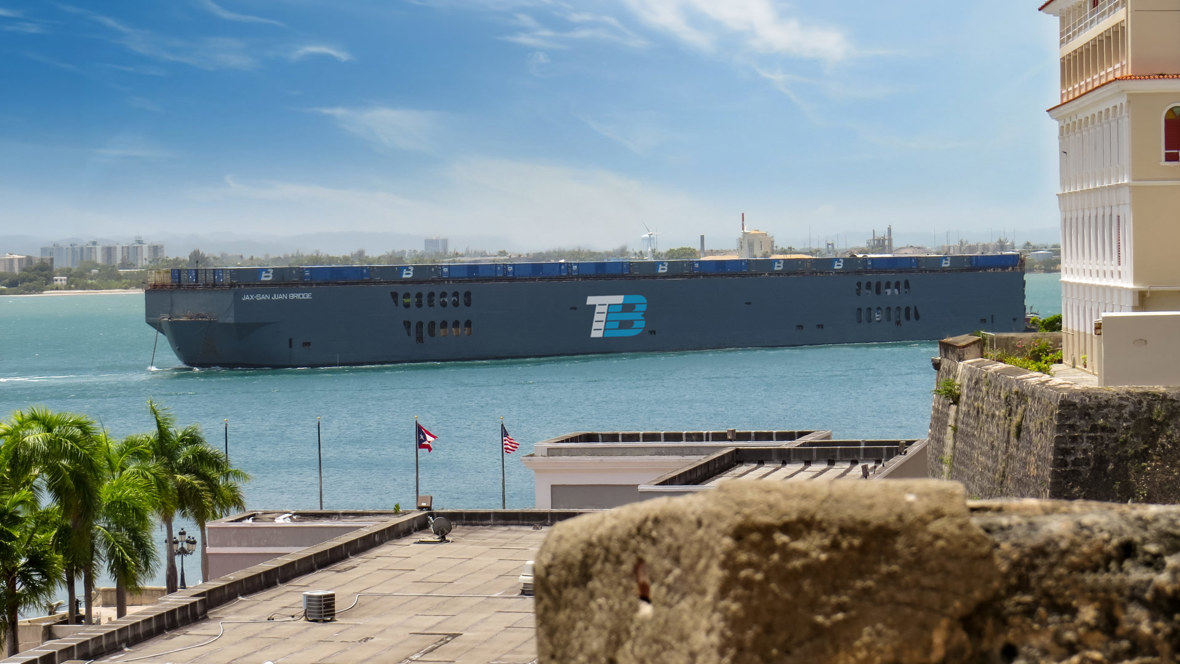
Foreign-Flag Carriers vs. Jones Act Carriers
Foreign-flag vessels operate under the laws and labor standards of their flag state. They often crew ships with multinational labor and operate under different regulatory and safety frameworks.
Jones Act carriers, by contrast:
- Operate under U.S. Coast Guard oversight
- Comply with U.S. labor laws
- Employ American mariners
- Invest in U.S.-built vessels and infrastructure
While foreign carriers can and do serve Puerto Rico in international lanes (for example, from Europe or Latin America), they cannot transport cargo between U.S. ports.
How the Jones Act Supports Puerto Rico’s Supply Chain
Much of the discussion around the Jones Act focuses on cost. But in Puerto Rico, the more strategic conversation around the Jones Act is how it supports resiliency for the island.
Dedicated Capacity
Jones Act carriers serving Puerto Rico operate dedicated trade lanes with fixed, frequent sailings. This provides predictable capacity between the mainland and the island.
In markets dependent on global carriers, capacity can shift based on international demand cycles. In the Puerto Rico trade, Jones Act carriers are committed to serving the lane, which supports greater rate stability over time.
Supply Chain Continuity
Because Puerto Rico is treated as domestic trade, cargo is not subject to international customs delays when moving from the mainland. That domestic designation supports streamlined documentation and more consistent transit planning.
In times of global shipping disruption, Puerto Rico’s domestic ocean shipping network provides insulation from international volatility.
Long-Term Infrastructure Investment
Jones Act carriers have invested billions in vessels, terminals, and port infrastructure serving Puerto Rico.
These are not opportunistic deployments based on short-term rate swings. They represent long-term commitments to the trade, including modern vessels, LNG-powered ships, specialized equipment, and dedicated terminal operations.
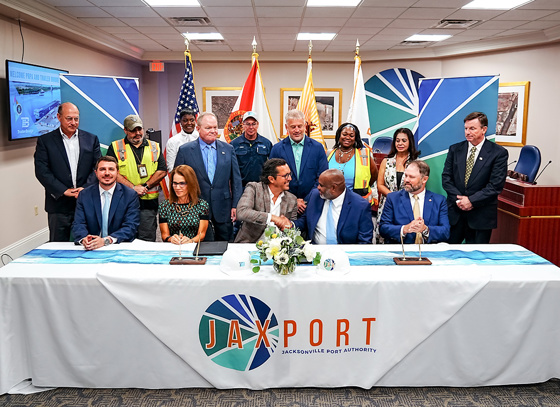
Committed to the Island.
Trailer Bridge signed long-term lease agreements with both the Jacksonville Port Authority and Puerto Rico Ports Authority signaling its long-term commitment to the Puerto Rico trade.
Hurricane Recovery and Disaster Response
The Jones Act fleet has played a crucial role in hurricane response and disaster recovery across Puerto Rico.
Because carriers maintain dedicated assets in the trade, they can rapidly restore service following storms. U.S.-based crews and companies are positioned to coordinate closely with federal and local agencies during recovery efforts.
Does the Jones Act Make Shipping to Puerto Rico More Expensive?
This is perhaps the most common question surrounding the Jones Act within the Puerto Rico trade.
There is a persistent perception that the law drives significantly higher costs. However, the cost discussion often overlooks broader value considerations.
As discussed in industry forums, including recent conversations featuring Trailer Bridge leadership, freight cost is only one component of total landed cost and supply chain risk.
- Dedicated capacity reduces volatility
- Domestic regulatory frameworks reduce compliance complexity
- Long-term infrastructure investment reduces service disruption
- Reliable hurricane response reduces downtime
When evaluated purely on per-container ocean rates, comparisons can oversimplify the full economic picture.
For Puerto Rico, an island dependent on maritime trade, the value of continuity, predictability, and resilience must be part of the equation.

Take a Closer Look.
Trailer Bridge executives discuss the future of trade between Jacksonville and Puerto Rico, including the role the Jones Act plays in supporting a resilient supply chain for the island.
Who Are the Jones Act Carriers Serving Puerto Rico?
The Puerto Rico trade is served by four primary Jones Act carriers:
Trailer Bridge
Trailer Bridge is a Jacksonville-based full-service transportation provider offering integrated ocean freight and logistics solutions between the mainland and Puerto Rico through its fleet of assets. In addition to its Jones Act service, the company also operates an international shipping division managing global supply chains.
Trailer Bridge is unique in the trade lane, operating roll-on, roll-off and load-on, load-off barge service that supports flexible cargo configurations. These assets support the movement of a wide variety of cargo, including containerized cargo, autos and rolling equipment as well as over-dimensional freight.
The company is known in the trade for its customer service, offering shippers a dedicated account manager to handle their supply chain needs. This simplifies the process for shippers and ensures consistent and efficient freight management.
TOTE Maritime Puerto Rico
TOTE operates LNG-powered vessels between Jacksonville and San Juan. The company is known for its investment in environmentally advanced ships and its long-standing presence in the Puerto Rico trade.
Crowley
Crowley provides container and roll-on/roll-off (RoRo) services between the U.S. mainland and Puerto Rico. With decades of experience in Caribbean shipping, Crowley has invested heavily in new LNG vessels and terminal infrastructure.
Trailer Bridge, TOTE and Crowley all service Puerto Rico from the Port of Jacksonville, operating at terminals within the Jacksonville Port Authority.
National Shipping of America (NSA)
Operating primarily out of Houston, National Shipping of America provides Jones Act service between the Gulf Coast and Puerto Rico, supporting trade flows beyond the Southeast corridor.
Together, these carriers form the backbone of domestic ocean shipping to Puerto Rico.
What Cargo Moves via Ocean Freight to Puerto Rico Under the Jones Act?
Nearly every category of commercial freight moves via ocean freight to Puerto Rico under the Jones Act. Because the island depends heavily on domestic ocean shipping, the variety of goods transported each week reflects the full spectrum of the Puerto Rican economy.
Common cargo shipped to Puerto Rico includes:
- Food and beverages
- Pharmaceuticals and medical supplies
- Retail goods and consumer products
- Construction materials
- Industrial equipment
- Automotive freight
- Fuel and energy-related cargo
In addition to standard containerized freight, ocean freight to Puerto Rico often includes oversized and specialized cargo such as heavy equipment, project freight, and over-dimensional machinery that supports infrastructure and industrial development across the island.
For shippers moving freight to Puerto Rico, the key is working with a Jones Act carrier that can handle diverse cargo requirements across the full domestic ocean shipping network.
Trailer Bridge’s asset-based model, including roll-on, roll-off and load-on, load-off barge service, allows customers to move everything from refrigerated consumer goods to oversized industrial cargo through a single Caribbean shipping partner.
Shipping to Puerto Rico
The Jones Act has governed domestic ocean shipping for more than a century. In the Puerto Rico trade, it provides structure, stability, and long-term investment.
For businesses shipping to Puerto Rico, the conversation is not simply about compliance. It is about selecting the right partner within a regulated domestic framework. One that offers reliability, capacity, operational scale, and strategic coordination to keep their supply chain moving.
As Puerto Rico continues to strengthen its island infrastructure and manufacturing sectors, Jones Act carriers will remain a key supporter of economic growth and supply chain continuity across the island.
- Share


Related Articles

Read More
January 28, 2026
Trailer Bridge Outlook 2026: Planning, Resilience, and Opportunity in the Supply Chain
Explore Trailer Bridge’s 2026 outlook for the supply chain, including market trends, Caribbean and international shipping insights, workforce evolution, and…

Read More
January 16, 2026
Logistics Readiness in the Western Hemisphere: Access, Sustainment, and Execution
An operationally focused discussion on the access, infrastructure, and commercial partnerships that enable logistics readiness across the Western Hemisphere.

Read More
December 19, 2025
2025 Year in Review: Strategy and Success
Explore Trailer Bridge’s 2025 highlights, from strategic milestones and industry awards to employee achievements, community initiatives, and operational excellence. Discover…
Stay Connected