Trailer Bridge Outlook 2026: Planning, Resilience, and Opportunity in the Supply Chain
January 28, 2026
|
As we enter 2026, the supply chain remains anything but static. Changing demand, evolving global trade dynamics, and higher expectations from customers and partners continue to reshape the industry. While rates remain part of the conversation, they are only one piece of a much larger picture. We sat down with key leaders to get their perspectives on the trends shaping the industry and what to watch for in the year ahead.
Surviving the Reset
Mitch Luciano, CEO
How would you describe the overall state of the market as we enter 2026?
The freight market is still adjusting after several challenging years. We’ve seen businesses close their doors, and it has been a painful shift, but a necessary one to right-size the industry. Is the reset complete? I’m not sure, but I’m hopeful that 2026 will bring more stability, preserved jobs, and opportunities for companies to thrive again.
What happened with the rates in 2025, and what’s next?
2025 wasn’t the rebound we had hoped for. We ended the year with average DAT monthly Dry Van spot rates at $2.29 per mile, which was slightly up from the start of the year but still below earlier expectations. Domestic prices are absolutely expected to rebound in 2026. With tightening capacity and continued economic activity, we could see rates rise above $2.75 per mile.
In 2025, we continued to see big names in the industry report losses and even close their doors. Do you expect this trend to continue in 2026, or will the industry level out?
I expect we’ll continue to see some companies reorganizing in the first half of the year as they adjust to new transportation patterns. I believe the industry will be fully reset by mid- to late-year, setting up for a strong rebound in 2027, which is much needed.
Who will survive another year of freight recession if we don’t see an uptick?
Companies that have built a strong customer service foundation will continue to succeed. Some shippers have taken advantage of the freight recession, but it’s not always about price. The key is finding the right balance between service and technology. Those companies that can reduce costs while keeping the human element front and center are the ones we will see thrive.
What factors do you think will drive a positive shift in the industry in 2026?
The biggest driver will be continued advancements in technology. As costs come down, more companies will be able to adopt these tools. The other element is continuing to focus on service, which remains the key factor for shippers when choosing partners. Technology is an important tool, but putting your people first will ultimately determine who succeeds.

International Shipping & Trade Dynamics
Zach Monger, Director, NVOCC and Compliance
Descartes reported that U.S. container imports peaked in mid-2025 following significant front-loading activity. As we look ahead to 2026, how do you see monthly import volumes trending, and what key drivers will influence that outlook?
I’ve seen forecasts suggesting that monthly import volumes in 2026 will struggle to reach the 2.6 million TEU peaks seen in 2025, with volumes likely ranging between 1.8 million and 2.1 million TEUs in the first half of the year. Much of this reflects a lingering “tariff hangover” from heavy front-loading in late 2025, combined with cooling U.S. consumer demand as high interest rates continue to impact sectors like housing and general merchandise.
There are reports that an influx of new ocean carrier vessels will enter the market this year, putting downward pressure on pricing. How do you see this impacting ocean rates and overall market balance?
The market is entering a period of overcapacity as a record number of new ultra-large vessels enter service, projected to increase global capacity by roughly 5% this year. While this added capacity is putting downward pressure on spot rates, the impact is being partially offset by ongoing diversions around the Cape of Good Hope, which absorb capacity that would otherwise flood the market.
Tariffs dominated the conversation throughout 2025 and remain a key concern heading into the new year. How do you expect tariff policy to shape shipper behavior this year?
Following the volatility of 2025, shipper behavior has evolved in 2026 toward cost absorption and sourcing shifts. While some costs are being passed through to consumers, many shippers are choosing to internalize the impact in order to remain competitive. At the same time, we’re seeing accelerated “China-plus-one” strategies, with increased sourcing from India and Southeast Asia to diversify supply chains.

Caribbean Market Outlook
Kyle Jones, Vice President, Sales & Jacob Wegrzyn, Vice President, Caribbean
What factors will drive import and export freight volumes in the Caribbean market in 2026?
Kyle Jones, Vice President, Sales
I expect the core drivers from 2025 to continue into 2026. Growth in tourism and hospitality will increase freight demand as the region accommodates record numbers of visitors. New resorts and renovations will drive shipments of building materials, fixtures, furniture, and food and beverages. Infrastructure upgrades, including ports, power grids, and roads, will create demand for heavy equipment, steel, and solar materials.
Nearshoring trends will also continue to benefit the Caribbean, as companies shift production closer to end consumers. We anticipate increased movement of raw materials and components to free trade zones for assembly, with the Dominican Republic positioned to see particularly strong gains.
Jacob Wegrzyn, Vice President, Caribbean
Construction continues to be one of the primary drivers of freight volumes, with multiple projects underway across the region. Government-backed public infrastructure projects are expected to begin mid-year, while the private sector continues to aggressively develop new housing projects. At the same time, the tourism sector is expanding, with two new hotels scheduled to open in 2026. Together, these activities are driving increased cargo volumes, creating jobs, and strengthening the overall regional economy.
Demand is expected to remain strong, with higher volumes anticipated in the second half of the year. Ongoing efforts to repair and strengthen the electrical grid are expected to drive continued shipments of electrical equipment, cable, and related products to Puerto Rico. In addition, several pharmaceutical manufacturers are expanding operations, which should result in further volume growth.
What will drive a turnaround for the domestic transportation market?
Kyle Jones, Vice President, Sales
In recent years, many smaller carriers have exited the market, and very few new players have entered, creating tighter capacity. We’re seeing this firsthand on our transfer loads. Capacity is constrained, and rates remain high. As we approach the potential end of the freight recession, the carriers that survived will have greater leverage, which could result in higher freight rates for shippers. The trend of shifting manufacturing back to the states rather than overseas should also provide a boost to the domestic market.
What will be the biggest driver of change for the supply chain in 2026?
Kyle Jones, Vice President, Sales
Technology continues to provide better tools to serve our customers, whether they are a small U.S. shipper or a global enterprise. While unforeseen temporary disruptions may occur in 2026, the ongoing emergence of AI, robotics, and autonomous systems will continue to enhance and improve operational efficiency across the industry.
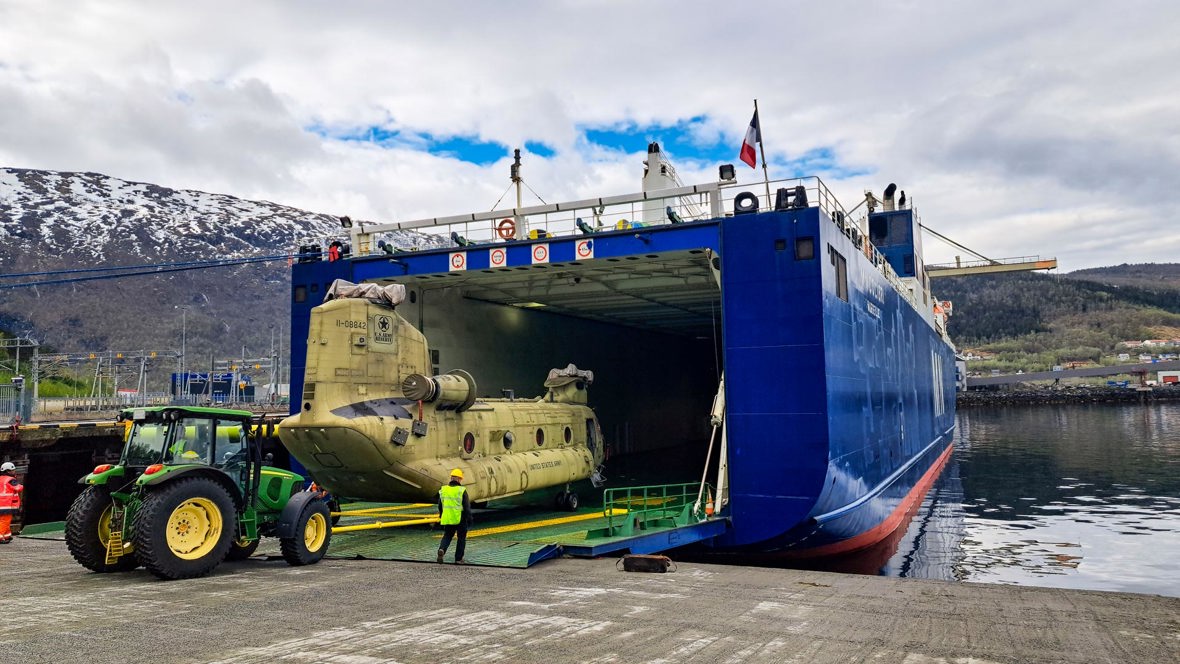
Government & Defense Logistics Outlook
Chris Goss, Vice President, Government and Projects
In 2025, most military logistics operations were focused on more traditional hubs like Europe, Asia and the Middle East. Based on the administration's new National Security Strategy, what do you anticipate for 2026?
In 2026, the Western Hemisphere is shifting from a background priority to a primary operational focus. The National Security Strategy emphasizes migration control, counter-drug and counter-cartel activity, overall stability, and strengthening hemispheric supply chains. This is expected to increase operational emphasis across the Caribbean, Gulf, and Central America, particularly for maritime logistics, port operations, sustainment, and rapid response support.
That said, traditional hubs in Europe, Asia, and the Middle East remain critical. Europe may see more surge-driven or contingency-based activity rather than steady growth, while other regions could demand attention with very little notice. Renewed escalation in Ukraine, instability involving Iran, or crises in the Indo-Pacific could quickly shift priorities, just as migration pressures or cartel activity in Latin America could reinforce the Western Hemisphere focus. The reality is that 2026 will not be predictable.
Success will be less about choosing one region over another and more about being prepared to operate in multiple regions at the same time and in more ways than we have seen in previous years.
What do you think will be the biggest opportunity and challenge in 2026 for the commercial sector when supporting military missions?
The biggest opportunity, and the biggest challenge, will be creating opportunity amid uncertainty. Commercial providers will be asked to support missions that shift faster, operate in less predictable environments, and move across regions with little warning. Companies that can remain flexible, maintain compliance, and execute reliably will separate themselves from the rest.
In 2026, the commercial sector is no longer just supporting military operations; it is directly tied to readiness. Those who can navigate change efficiently while upholding performance standards will succeed.

Talent & Workforce Outlook
Kacy Swanson, Vice President, Employee Services
What does workforce development look like in 2026? And how do you predict it will evolve this year?
Workforce development in 2026 is being shaped by a tight labor market and roles that are evolving faster than the available talent. Many of these positions aren’t entirely new; they are existing roles that now demand different skill sets as technology and AI transform how work gets done. With fewer traditional pipelines and a shrinking labor pool, we have to rethink and get more creative about where talent comes from. This includes tapping into often-overlooked populations, investing in upskilling and retaining existing employees.
How has the tough freight market impacted hiring, and is this trend expected to continue in 2026?
The volatility of the freight market over the past few years has forced organizations to be much more disciplined in their hiring strategy. Instead of hiring for growth’s sake, hiring decisions, both replacements and additions, are now more closely tied to operational efficiency, ROI, and long-term sustainability.
As a result, we’ve been more selective and strategic with adding new roles, with greater focus on cross-training and upskilling existing talent. I do anticipate some of this pressure continuing into 2026. That said, companies that have taken the time to right-size, streamline and invest in their people will be better positioned to move quickly when the market turns. The goal isn’t to stop hiring altogether—it’s hiring smarter.
From a human capital perspective, how are businesses preparing for success in 2026 and 2027?
Looking ahead to 2026 and 2027, the focus is on building durability and flexibility in the organization. This includes setting clear expectations around performance, development and accountability, and giving management the tools to succeed through a solid performance management program. It also means leveraging technology to support, not replace, our people, helping them work more efficiently during leaner times.
Continuing to invest in engagement, communication and retention during those cycles is critical to preserving organizational culture. Time also needs to be spent future-proofing roles by looking ahead 18-24 months to understand what skills will be needed, allowing us to be more proactive rather than reactive, and better positioned for long-term success into 2027 and beyond.
The Road Ahead
The TB Outlook isn’t about predicting the future, it’s about preparing for it. 2026 won’t be defined by a single rebound moment. Success will come from planning, discipline, flexibility, and collaboration. By staying resilient and focused, Trailer Bridge is ready to meet whatever the year brings while continuing to provide the high level of service our partners and customers have come to expect.
- Share


Related Articles

Read More
February 20, 2026
The Jones Act and Puerto Rico: What It Is and Why It Matters for Shipping
For companies shipping freight to Puerto Rico and for businesses operating on the island, a clear understanding of the Jones…

Read More
February 9, 2026
Enabling NATO Rapid Mobilization: Operational Realities in Poland
An in-depth analysis of NATO rapid mobilization through Poland, examining why trusted military-commercial logistics partnerships at Baltic ports are critical…

Read More
January 16, 2026
Logistics Readiness in the Western Hemisphere: Access, Sustainment, and Execution
An operationally focused discussion on the access, infrastructure, and commercial partnerships that enable logistics readiness across the Western Hemisphere.
Stay Connected