Tug & Barge vs. Vessel Service: What Shippers Need to Know in the Puerto Rico Trade
For companies shipping freight between the U.S. mainland and Puerto Rico, transportation decisions directly impact inventory, product availability and overall supply chain performance.
Because Puerto Rico is part of the Jones Act trade lane, cargo moving between the mainland U.S. and Puerto Rico moves aboard U.S.-built, U.S.-owned and U.S.-crewed vessels. While all Jones Act carriers operate within the same regulatory framework, service models can vary significantly.
A common comparison shippers evaluate in this trade lane is tug and barge service versus vessel service. While both move cargo reliably to and from Puerto Rico, the operational differences can influence transit time, inventory strategy and speed to market.
Sailing Time
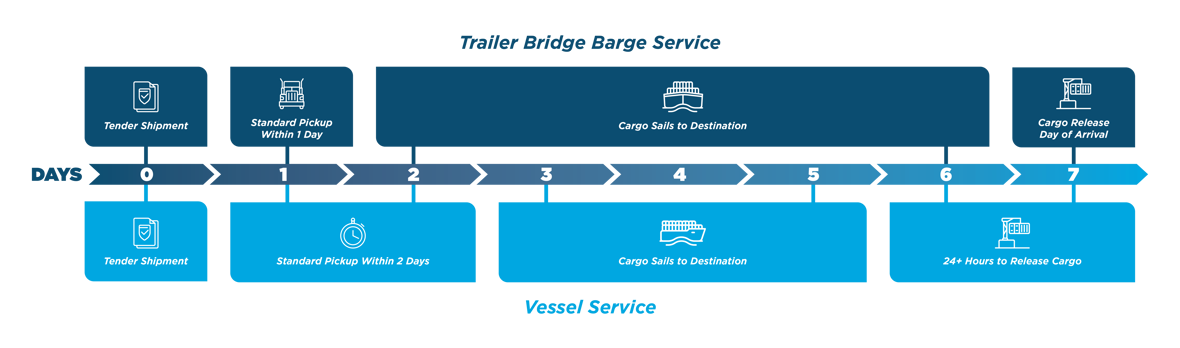
One of the biggest differences between tug and barge service and vessel service is sailing time.
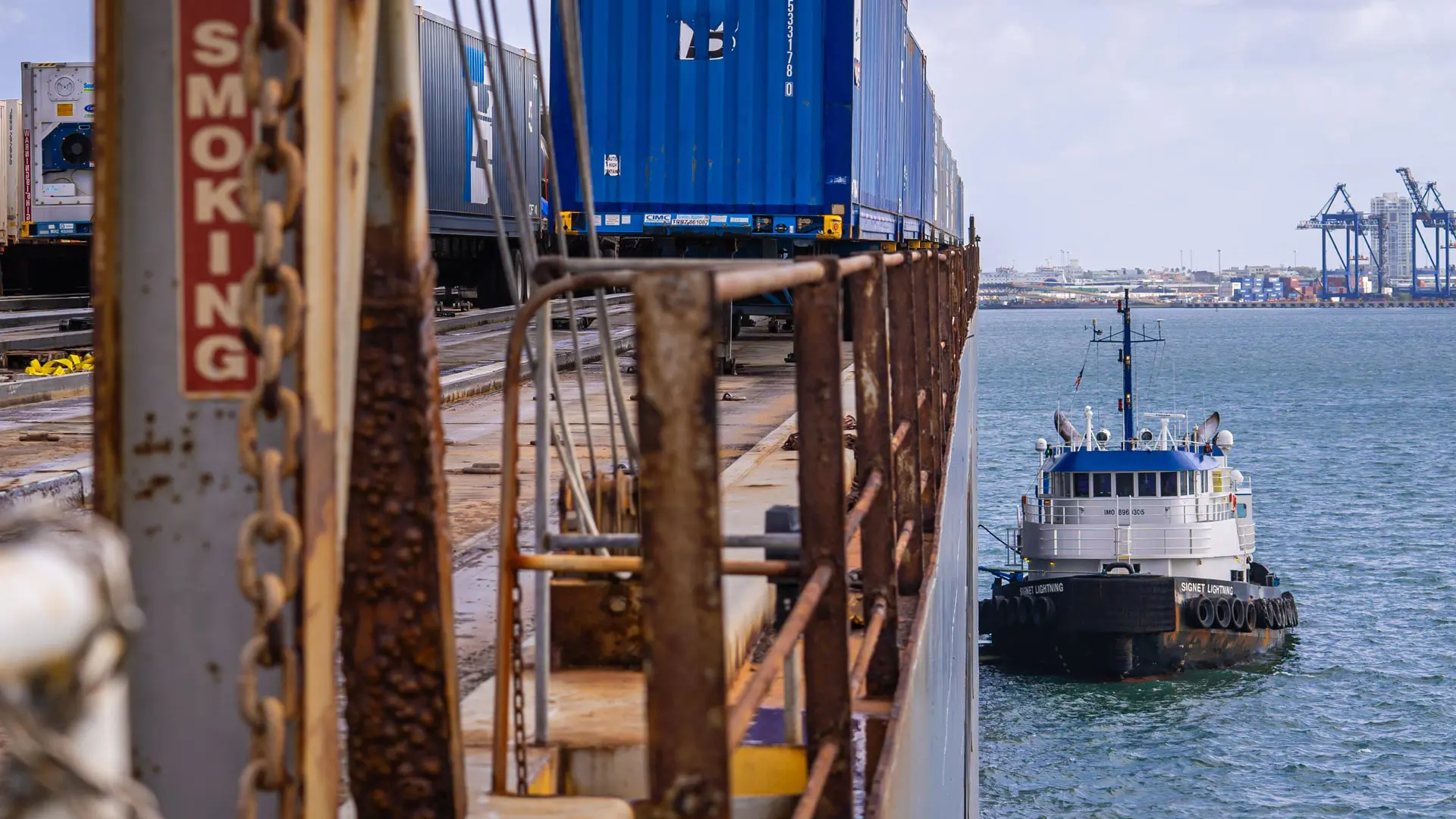
Tug and barge operations use a tugboat to pull an unpowered barge loaded with cargo. Because barges move at slower speeds, on the water transit times are generally longer.
Vessel service uses self-propelled ships designed to move containers and trailers between ports, typically resulting in shorter transit windows.
Speed to Destination vs. Speed to Market
When evaluating ocean transportation, many companies are shifting the conversation from speed to destination to speed to market.
Speed to destination focuses on how quickly freight moves port-to-port, in this case from Jacksonville to Puerto Rico.
However, speed to market looks at the broader business impact, including how quickly cargo can be discharged, picked up and delivered to its final destination.
This is an important distinction when comparing tug and barge service with vessel service.
While vessel service may offer faster sailing speeds, tug and barge operations can offset some transit time through faster cargo discharge and terminal availability.
In many cases, cargo moving via tug and barge can be discharged and available for customer pickup within the same day. Vessel service does not allow for cargo pick-up the same day.
Floating Warehouse Space
One advantage often associated with tug and barge service is the ability to use freight in transit as a form of floating warehouse space.
Because transit times are longer, some companies intentionally use cargo on the water as part of their inventory strategy.
For businesses with predictable demand patterns, this can help reduce immediate warehouse storage needs while keeping product moving through the supply chain. This approach can be particularly useful for shippers balancing warehouse capacity constraints with consistent replenishment needs.
Using Sailing Schedules to Support Inventory Planning
Many shippers utilize multiple service providers to manage delivery timelines and support warehouse efficiency.
In the Puerto Rico trade lane, carriers operate on different sailing schedules throughout the week, allowing shippers to stagger inbound inventory and better manage warehouse flow.
For large retailers, manufacturers and consumer goods companies, spreading inventory arrivals across multiple days can create significant operational advantages.
For example, instead of receiving 40 containers within a two-day window, a shipper may prefer to distribute arrivals throughout the week, such as:
- 15 containers on Friday
- 10 containers on Monday
- 10 containers on Tuesday
- 5 containers on Thursday
While the total freight volume remains the same, spreading arrivals across multiple sailing schedules can help reduce warehouse congestion, improve labor planning and create a more consistent flow of inventory into distribution networks.
This strategy can support more efficient warehouse operations while ensuring adequate stock to meet customer demand.
Choosing the Right Service Model
There is no one-size-fits-all answer when comparing tug and barge service with vessel service.
The right solution depends on a shipper’s inventory strategy, delivery expectations, product type and overall supply chain goals.
Some companies prioritize inventory velocity and faster replenishment. Others may value longer inventory pipelines or different cost structures.
Understanding how each transportation model supports your business objectives is key to building a more resilient and responsive Puerto Rico supply chain.

Ready to Optimize Your Puerto Rico Shipping Strategy?
Every supply chain is different. Speak with one of our transportation experts to find the right service model for your freight, inventory goals and delivery expectations.
- Share


Related Articles

Read More
October 1, 2026
A New Chapter for Trailer Bridge
Our leadership team shares what's next for our people, our customers and Puerto Rico. Trailer Bridge is entering a new…

Read More
September 16, 2026
Investing in the Assets Behind Our Puerto Rico Service
For more than 30 years, Trailer Bridge’s vessels have served as a critical link between Jacksonville and San Juan, carrying…

Read More
September 1, 2026
From Mainland to Market: What Food & Beverage Brands Need to Know About Shipping to Puerto Rico
Expanding into Puerto Rico can open a new market for food and beverage brands but getting products onto store shelves…
Stay Connected